
I didn’t always love Sunday School.
Growing up, my birthday fell in a way that often placed me in a different class than my friends.
One year, I decided to just attend with them. It didn’t seem like a big deal to me, and I had talked it through with my parents beforehand.
But it became one.
I was corrected in a way that made it feel like I was doing something seriously wrong.
And over time, I developed a pretty negative attitude about Sunday School.
For a lot of my adult life, I just skipped it.
It felt repetitive. Predictable. Not especially meaningful.
For a long time, I think many of us have quietly understood Sunday School the same way.
Someone prints the rolls.
Someone takes attendance.
Someone rings the bell.
Someone makes sure every class has a teacher.
Someone keeps things moving.
And if everything runs smoothly, we call that success.
But I don’t think that’s what the calling was ever meant to be.
And yet, Sunday School is meant to be something much more than that.
In The Church of Jesus Christ of Latter-day Saints, it’s meant to be a place where people come to learn about Jesus Christ, strengthen their faith, and carry those experiences into their homes.
Where testimonies are formed and strengthened.
When I was called as Sunday School President, I started looking more closely at what the role actually is.
Not what we’ve turned it into over time—but what it’s meant to do.
And what stood out to me was this:
The Sunday School presidency is responsible for helping members learn the gospel—not just at church, but in their homes.
That phrase—home-centered gospel learning—comes up often. But I don’t know that we always treat it like something we can actively build.
One thing that surprised me was how hard it is to find clear, consolidated guidance for Sunday School teachers and presidencies.
There are helpful principles, but not always a clear picture of how it all comes together in practice.
When you compare that to other areas of the Church—like youth programs, where there’s a lot of structure and support—it starts to make sense why Sunday School can sometimes feel like a smaller, more logistical assignment.
Sunday School is held on the first and third Sundays. The second and fourth Sundays are focused on the youth program, where the young men and young women meet separately.
So in a typical month, the responsibility for teaching the youth is essentially split.
Which means Sunday School teachers are shaping half of the youth’s Sunday learning experience.
That makes their role more significant than it might first appear—and worth more attention than it sometimes receives.
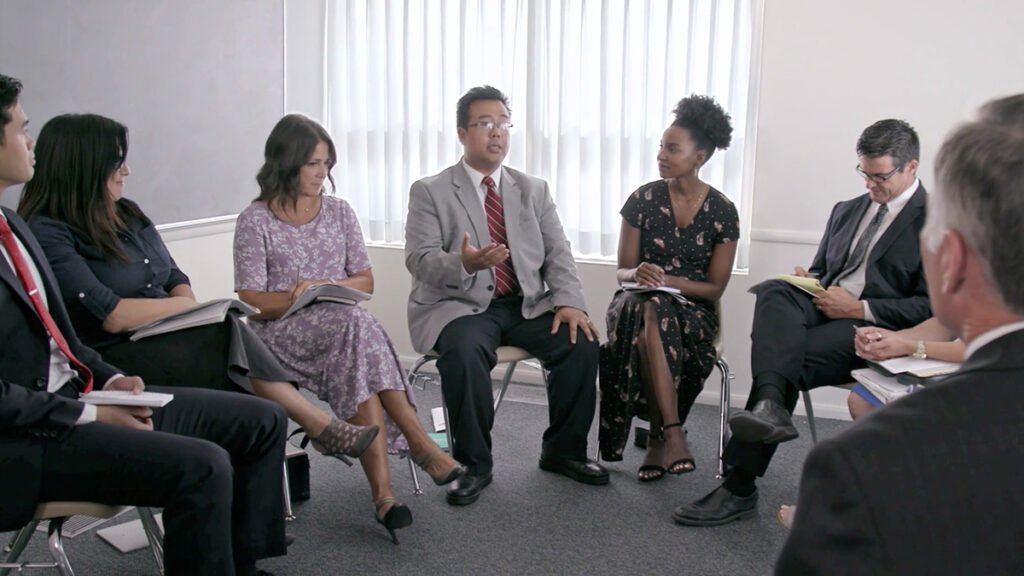
That’s where Teacher Council meetings become so important.
They create space to talk about how we teach, not just what we teach.
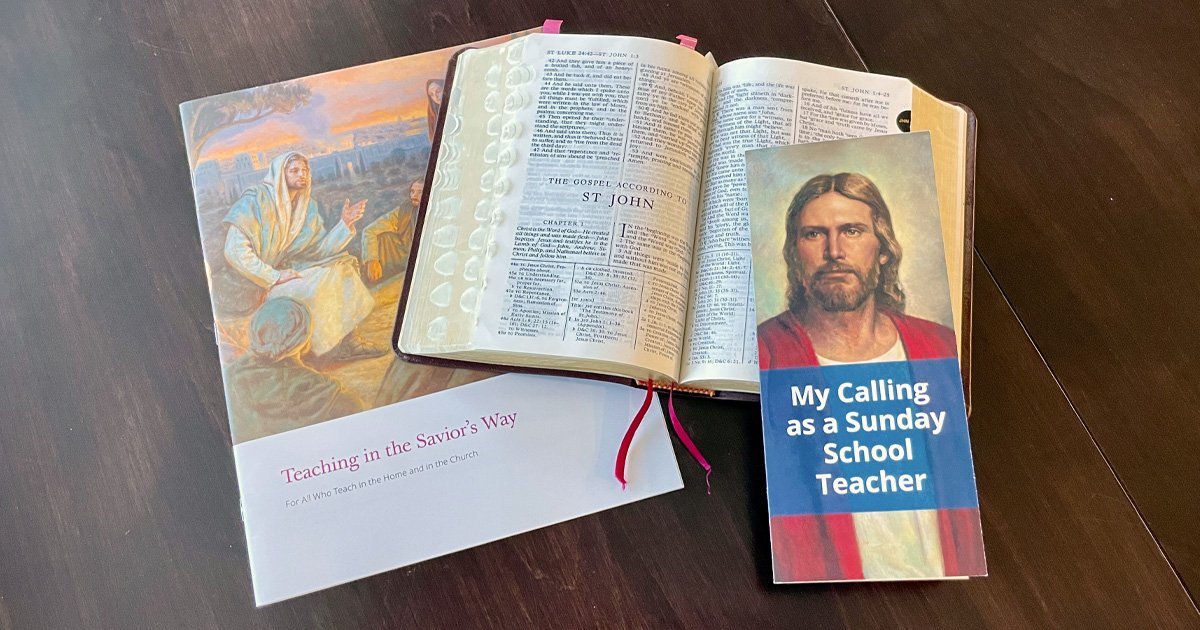
The structure for those meetings is already outlined in Teaching in the Savior’s Way.
There’s nothing complicated about it.
And when it’s followed as intended, it’s surprisingly effective.
The challenge is that they only happen a few times a year.
Which means a lot of the growth in between depends on how intentional we are as a presidency.
Part of that meant being more intentional about how we brought people together.
Rather than meeting as one large group, we organized teacher councils into smaller groups based on who people were teaching—Sunday School teachers, youth leaders, Primary, and even parents.
That took some coordination.
We worked with leaders to make sure people had opportunities to participate, especially for parent councils. It meant more meetings, smaller groups, and more time spent facilitating discussions.
There wasn’t really a set template—just a willingness to try things, adjust, and learn what worked.
And a lot of that only worked because we approached it as a presidency. My first counselor, in particular, did a lot of the heavy lifting to help organize the logistics.
Where the shift started
One thing that made a big difference was helping teachers really understand the principles in Teaching in the Savior’s Way.
Not just as a manual—but as a way to approach teaching.
Love those you teach.
Teach by the Spirit.
Teach the doctrine.
Invite diligent learning.
When those principles clicked, everything else started to fall into place.
Because when teaching is done that way, something changes in the room.
People feel seen.
They feel heard.
They feel comfortable sharing.
And in that kind of environment, they’re more open to the quiet promptings that build testimonies over time.
That’s when the shift really started to happen.
One simple thing that helped was meeting with new teachers right when they were called.
We’d visit them, walk through what to expect, share a short overview of the calling, and talk about where they could go for support.
I also put together a simple pamphlet with everything I could find about the calling—something tangible they could refer back to as questions came up.
Nothing complicated—just a way to make sure they didn’t feel like they were on their own.
Another shift was helping teachers get into the scriptures quickly.
Within the first few minutes of a lesson, the class is already reading, pondering, and discussing.
Not as a formality—but as the center of the experience.
Because there’s already more than enough in the scriptures and the Come, Follow Me manual we use for our lessons to fill the entire time—without needing additional materials.
It’s learning how to ask good questions and help people engage with what’s already there.
That has changed the feel of lessons.
Less presenting.
More discussion.
More people participating.
Not because anyone is doing something extraordinary—but because the focus is in the right place.
I think part of why this has mattered so much to me comes from that earlier experience.
I wanted people—especially youth—to feel like Sunday School was a place they actually wanted to be.
So we made some simple adjustments.
We grouped youth by school grade instead of strictly by calendar year.
We tried to keep friends together when possible.
And when someone naturally gravitated toward a different class, we paid attention to that and worked with it instead of against it.
The goal was simple:
That they would come.
That they would feel comfortable.
That they would stay.
And as teachers have leaned into the principles in Teaching in the Savior’s Way—especially focusing on the scriptures and real discussion—I’ve seen a noticeable change.
Not just with the youth, but in the adult classes as well.
Attendance has increased.
More people are participating.
And the conversations feel more real.
Even small things helped set that tone.
For teacher council meetings, I started creating simple, personalized invitations and having them professionally printed.
Not because that’s required—but because I wanted people to feel like it mattered.
That their role mattered.
And that the time we spent together was worth showing up for.
That’s why I was really encouraged to hear about the recent policy change allowing Sunday School presidencies to be either all men or all women.
It doesn’t change the purpose of the calling.
But it does expand who can help lead that effort.
And I can see that making a real difference over time.
Different perspectives tend to surface different needs.
And I think this could lead to more awareness around the kind of support Sunday School teachers are looking for—both locally and more broadly.
If there’s one thing I’ve come to appreciate, it’s this:
Sunday School has more influence than it might seem.
Because when it’s done well, it helps create the kind of environment where testimonies can grow.
I don’t think anything about the calling itself needs to change.
But I do think there’s more there than we sometimes realize.
If helpful
- a simple pamphlet for new teachers, used as part of informal in-home orientations
- personalized invitations for teacher councils
Nothing complicated. Just some small things that have helped keep the focus on what matters.
If it would be helpful, I’m happy to share what I’ve put together.
Nothing complicated. Just some small things that have helped keep the focus on what matters.




Amen! ❤️